Key takeaway: Living in the Laurentians means choosing between the Montréal suburbs, the Pays-d’en-Haut and the Upper Laurentians. The farther north you go, the bigger the lot, but the farther the train station and the hospital, and the longer a resale takes. In the third quarter of 2026, a single-family home in the region sold for a median of $573,750, according to Centris.
A family that leaves Laval for Blainville keeps its train, its commute and most of its habits. One that moves to Saint-Sauveur changes its pace, its real estate market and its distance to the hospital. Yet both say they are going to live in the Laurentians.
It is the second kind that weighs most in the numbers. Between July 1, 2024 and July 1, 2025, the region gained 5,655 residents through moves with the rest of Quebec, and the strongest growth, proportionally, happened in the Pays-d’en-Haut and Argenteuil, not on Laval’s doorstep.
Pays-d’en-Haut and Argenteuil attract the most new residents
In short: in 2024-2025, these two RCMs posted the largest migration gains in the region, well ahead of the areas next to Laval.
The Institut de la statistique du Québec bulletin on interregional migration ranks the Laurentians second among regions with net gains in 2024-2025, behind Lanaudière, with a net rate of 0.85%. Montréal lost 3,300 residents in one year.
The Pays-d’en-Haut gained the equivalent of 2.49% of its population, and Argenteuil 2.39%, the second and third best results in Quebec. The Laurentides RCM, around Mont-Tremblant and Sainte-Agathe-des-Monts, follows at 1.90%.
Closer to Montréal, the picture is reversed. Rivière-du-Nord and Mirabel hover around 0.9%, Deux-Montagnes tops out at 0.12%, and Thérèse-De Blainville shows a slight net loss.
This shift changes the competition when buying: in the Pays-d’en-Haut, the family leaving Laval is often after the same house as a weekend cottage buyer.
Three Laurentians that are not lived the same way
The region’s eight RCMs form three realities:
- The suburbs near Montréal. Thérèse-De Blainville, Deux-Montagnes, Mirabel and Rivière-du-Nord, along Highways 15 and 640. People buy here to shorten the commute.
- The Pays-d’en-Haut and Argenteuil. Saint-Sauveur, Sainte-Adèle, Morin-Heights or Lachute, where cottages sit next to family homes. People buy here for space, often with remote work.
- The Upper Laurentians. The Laurentides RCM and Antoine-Labelle, from Mont-Tremblant to Mont-Laurier, where Route 117 takes over from Highway 15. People often buy here for pre-retirement.
To decide between two suburban towns, the Saint-Jérôme vs. Mirabel comparison puts prices, schools and access to Montréal side by side.
North of Saint-Jérôme, the car replaces the train
In short: the train connects Saint-Jérôme to downtown Montréal in about 1 hour 25 minutes; farther north, there are no more stations and health care becomes more spread out.
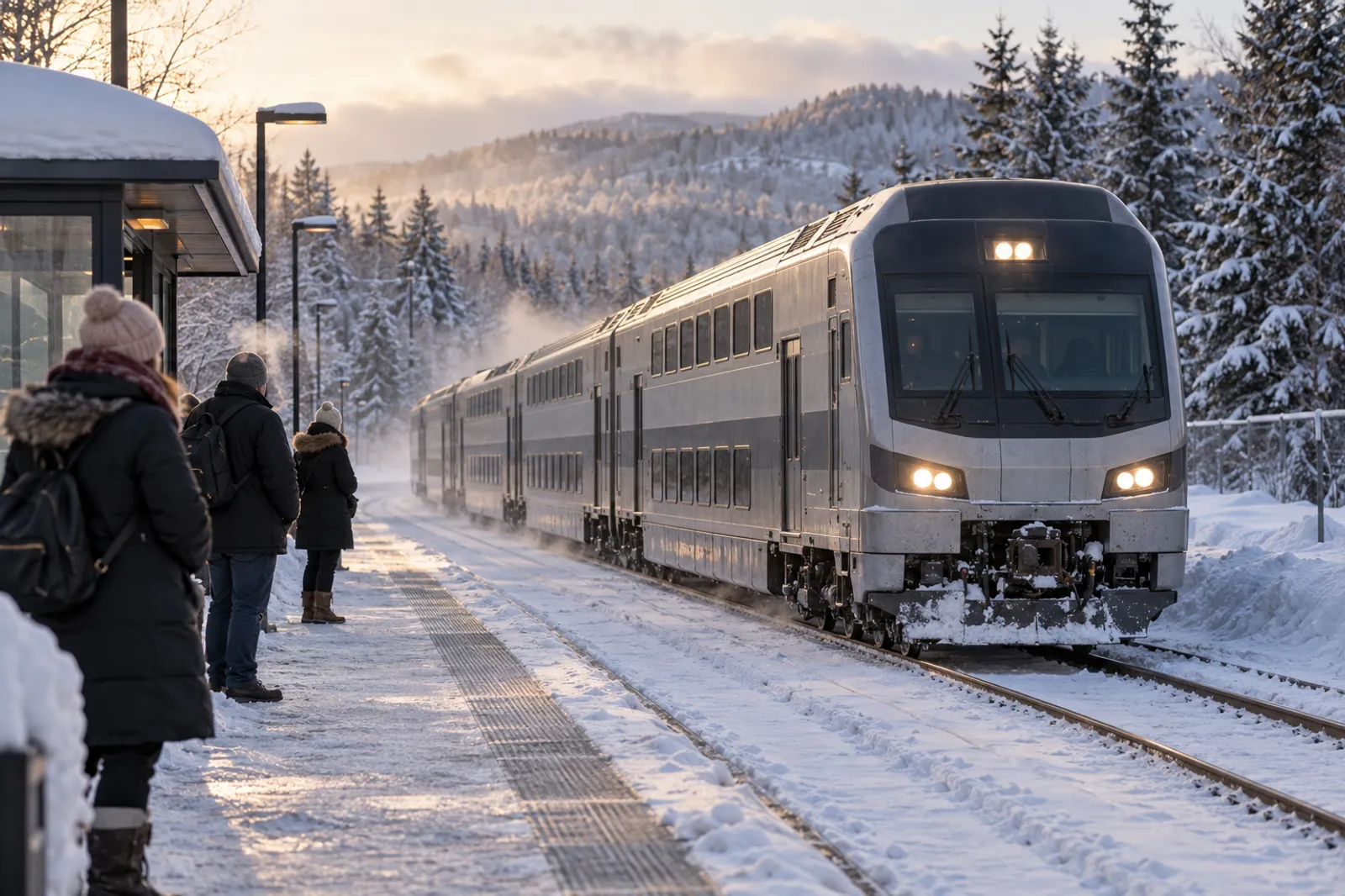
According to the exo line 12 Saint-Jérôme schedule, five trains leave Saint-Jérôme for Lucien-L’Allier station on weekday mornings, between 5:15 and 7:30 a.m. The 7:10 a.m. train arrives at 8:35 a.m.; from Blainville, the same train takes 1 hour 10 minutes.
On weekends, trains to Montréal stop at De la Concorde station in Laval. And beyond Saint-Jérôme, there are no more stations: from Saint-Sauveur or Sainte-Agathe-des-Monts, you get to Montréal by Highway 15.
Health care follows the same slope. The CISSS des Laurentides list of hospitals includes hospitals in Saint-Eustache, Saint-Jérôme and Mont-Laurier, and multiservice centres in Lachute, Rivière-Rouge and Sainte-Agathe-des-Monts, where the former Hôpital Laurentien has changed its name. Before buying, ask which services are offered there, including the emergency room.
For a central town where everything is a few minutes away, see life in Saint-Jérôme in numbers.
Internet and winter are checked by address, not by town
Opération haute vitesse, completed in March 2024, connected more than 339,500 Quebec households, according to the Government of Quebec status report. Its map shows, address by address, whether service reaches the street; “service to be confirmed” means satellite service at a minimum. The provider’s information takes precedence: get it before making an offer.
Winter can be measured too. Environment and Climate Change Canada’s climate normals show 291.5 cm of snow per year in Saint-Hippolyte, at an elevation of 365 m, compared with 184 cm in Saint-Jérôme, about twenty kilometres to the south (1981-2010 period). Heating degree-days go from 4,762 in Saint-Jérôme to 5,125 in Saint-Hippolyte: about 8% more to heat, for the same house.
More snow also means a driveway to clear more often and, on a private road, a share of the maintenance to pay with the neighbours: ask for the road agreement before signing. On the plus side, on the Le P’tit Train du Nord linear park, a 234 km trail, the section from Saint-Jérôme to Sainte-Agathe-des-Monts is groomed for cross-country skiing; farther north, some sections become snowmobile trails.
The regional median price hides very different resale times
In short: in the third quarter of 2026, a single-family home in the Laurentians sold in 49 days, but a condo in Mont-Tremblant stayed listed for 174 days on average.
According to Centris real estate statistics for the Laurentians, 1,804 single-family homes changed hands in the third quarter of 2026. The median reached $573,750, up 5%, with 49 days on the market. Active listings climbed 16%, to 3,783 homes.
Centris data for Mont-Tremblant show a single-family median of $645,000 (+12%) and an average of 76 days on the market. For condos, only 49 sales for 292 listed properties, and 174 days on average.
Divide listed properties by the quarter’s sales: at the current pace, the region’s single-family inventory would sell off in about six months. It would take nine in Mont-Tremblant, and nearly a year and a half for its condos. This ratio is calculated from Centris figures; Centris does not publish it.
A slow market helps buying and hurts resale: a buyer settling up north can negotiate without rushing, but must plan for the patience a forced sale would require after a job transfer or a health problem.
Before booking visits in two areas, describe your buying project: the properties suggested will take into account your commute, your budget and the resale time.
On the waterfront, the flood zone map comes before the visit
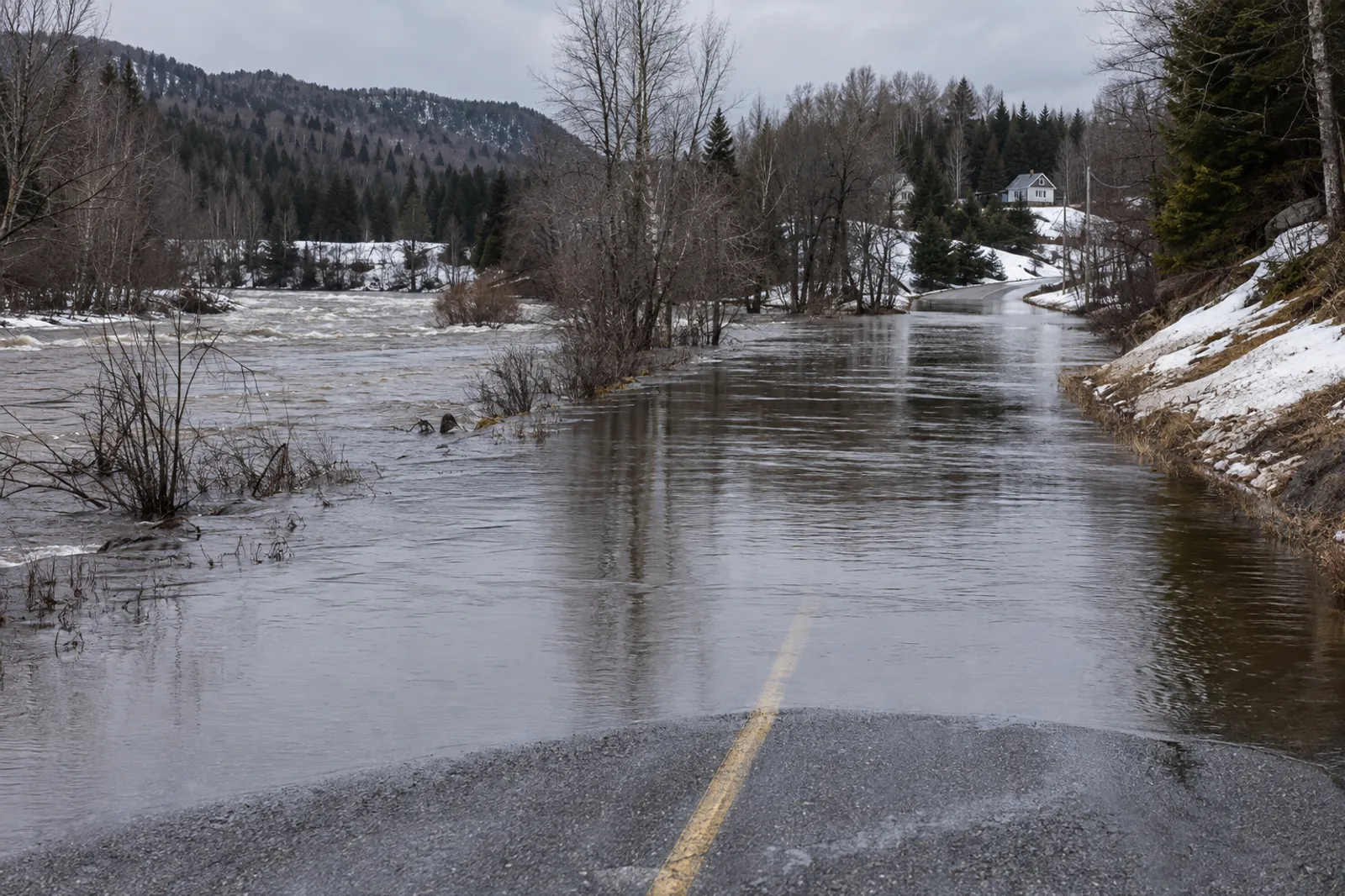
In the region, the waterfront that the new mapping is redrawing has familiar names: the Rivière du Nord, which runs through Saint-Jérôme; the Rouge, from Rivière-Rouge to Grenville-sur-la-Rouge; Lac des Deux Montagnes and the Rivière des Mille Îles, around Deux-Montagnes and Saint-Eustache.
The CAA-Québec guide on the new flood zone mapping explains that since March 2026, Quebec has been gradually publishing maps that affect about 30% more homes. Until an area appears on them, the old map applies. A newly classified home can cost more to insure, the lender may require a larger down payment, and overland flood coverage is added by endorsement.
Before waiving conditions, check the map for the exact address, get a firm insurance quote with that endorsement and ask the town’s planning department what the zone allows for renovation and rebuilding.
Choosing your area based on the life you will actually lead
| Your situation | Area to look at first | What to check before visiting |
|---|---|---|
| Two jobs in Laval or Montréal, children in high school | Thérèse-De Blainville, Mirabel, Rivière-du-Nord | Train schedule at the nearest station, high school for the address |
| Remote work three days or more, need for space | Pays-d’en-Haut, Argenteuil | Internet at the exact address, public or private road, short-term rentals in the neighbourhood |
| Pre-retirement, plan to live at the cottage year-round | Laurentides RCM, Antoine-Labelle | Services offered at the nearest health centre, snow removal, resale time in the area |
| Purchase with rental income | Depends on municipal zoning | Permitted use on the lot, registration of the accommodation |
For a purchase with rental income, the analysis on real estate investment in the Laurentians details CITQ registration and the role of zoning.
Living in the Laurentians by choosing your area first
A home in the Laurentians is judged by four distances the listing does not give: to the train station, to health care, to Internet and to the water. To live in the Laurentians without unpleasant surprises, measure them before the first visit, then check the area’s resale time. The kitchen and the number of bedrooms then decide between the homes that passed these tests.
Planning a move to the region within a year? Book a first conversation to get recent sales in the areas you are comparing.
FAQ
Is living in the Laurentians a good choice for a family?
Yes, if the area fits where the parents work. A family that wants to live in the Laurentians close to Laval will find the commuter train, Highways 15 and 640 and nearby high schools in Thérèse-De Blainville, Mirabel and Rivière-du-Nord. Farther north, lots get bigger, but the high school, health care and the grocery store get farther away, and most trips are made by car.
Which towns are part of the Lower Laurentians?
There is no official list. The term generally refers to the southern part of the region, the area closest to Laval: Saint-Eustache in Deux-Montagnes, Blainville, Sainte-Thérèse and Boisbriand in Thérèse-De Blainville, the city of Mirabel and, depending on who you ask, Saint-Jérôme in Rivière-du-Nord. The Institut de la statistique du Québec instead divides the region into eight RCMs, from Argenteuil to Antoine-Labelle, and its annual interregional migration data follow that breakdown.
How long does it take to get to Montréal by train from the Laurentians?
About 1 hour 25 minutes from Saint-Jérôme. On weekdays, the 7:10 a.m. train arrives at Lucien-L’Allier station at 8:35 a.m., and the trip takes 1 hour 10 minutes from Blainville. Parc station, in the north end of Montréal, is less than an hour from Saint-Jérôme. On weekends, trains stop in Laval. North of Saint-Jérôme, there is no station: the trip is made by car.