Are you looking to make a real estate investment in Saint-Jérôme without paying Montreal prices? The city stands out as the most strategic choice in the Laurentians, and that is no accident.
Saint-Jérôme combines competitive rental yields, sustained demand and financial accessibility that large urban markets can no longer offer. The city concentrates every ingredient of a healthy market: population growth, a diversified tenant base, solid infrastructure and direct access to Montreal via Autoroute 15.
This guide explains why Saint-Jérôme dominates investment in the Laurentians and how to take advantage of this market in 2026.
Why real estate investment in Saint-Jérôme is strategic
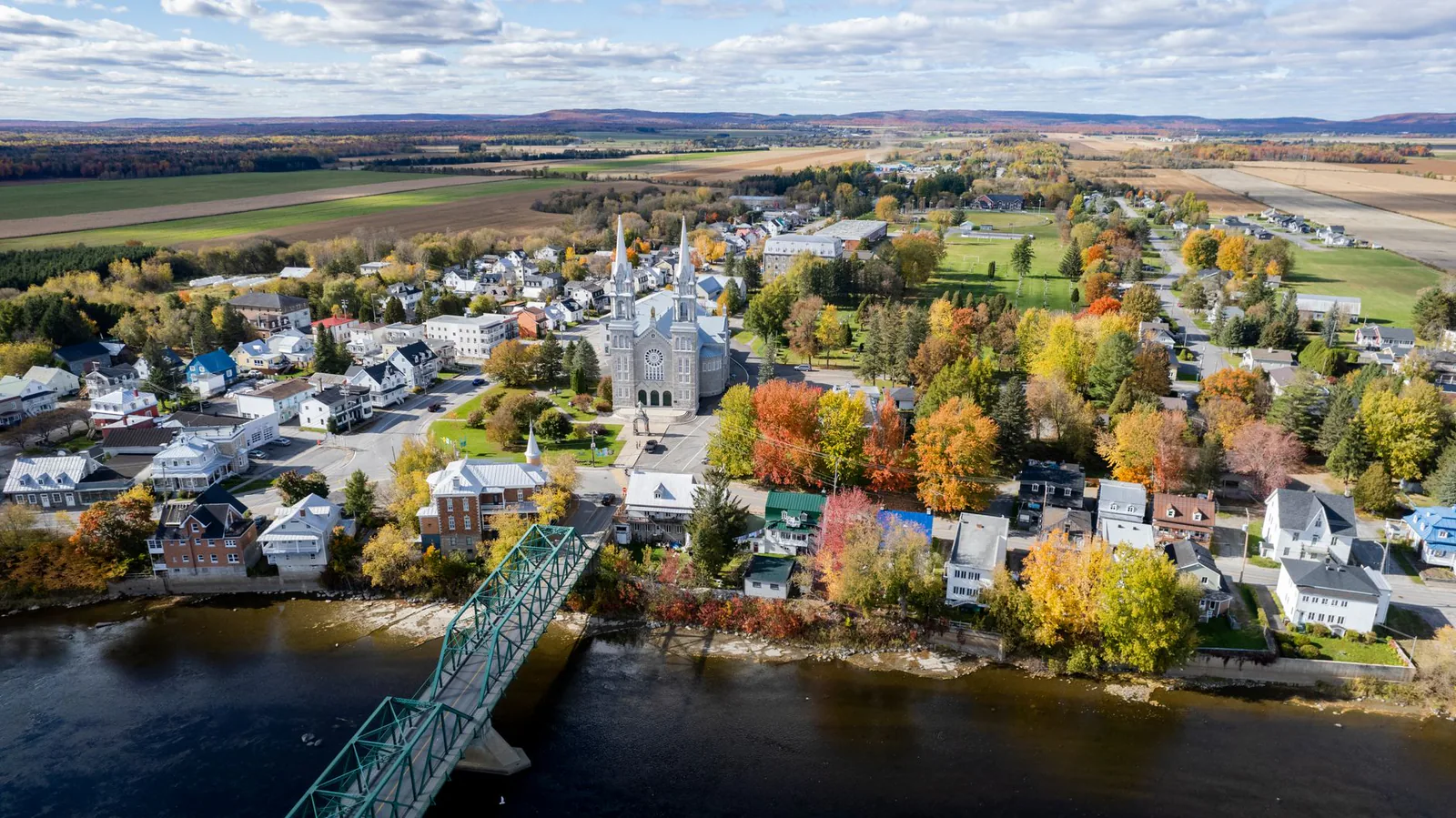
Saint-Jérôme is not simply a suburban city. It is the administrative and economic capital of the Laurentians, with a population base of about 85,000 residents.
Its geographic position is a structural advantage. Less than 50 km from Montreal, it attracts both commuters and remote workers who have left the metropolis. Both groups feed rental demand directly.
The city also hosts several major institutions: a regional hospital, a CEGEP, a courthouse, satellite university campuses and an active industrial zone. These stable tenant generators are valuable to any residential real estate investor.
According to APCIQ data for the first quarter of 2026, the median price of plexes in Quebec climbed 8% in one year, while Saint-Jérôme posted a median price of $637,500 for income properties, below the Montreal metropolitan area average of $865,000.
Return on a rental building in Saint-Jérôme

The return on a real estate investment in Saint-Jérôme is measured mainly through three indicators: the gross income multiplier (GIM), the capitalization rate and monthly cash flow.
A GIM between 12 and 16 times gross annual revenues is typical of the current market. A capitalization rate between 4.5% and 6.5% is realistic depending on the area, building condition and rent structure.
| Indicator | Formula | Saint-Jérôme 2026 benchmark |
|---|---|---|
| Gross income multiplier (GIM) | Price ÷ gross annual revenues | 12 to 16 |
| Capitalization rate | Net operating income ÷ price | 4.5% to 6.5% |
| Debt service coverage ratio | Net income ÷ mortgage payment | 1.20 minimum |
| Cash-on-cash return | Cash flow ÷ down payment | Varies with financing |
Residential rents in Saint-Jérôme have risen notably in recent years. A 3½ typically rents for $950 to $1,200 per month depending on area and condition, and a 4½ for $1,150 to $1,450.
These numbers are only a starting point. The real analysis must factor in existing leases, increases permitted by the Tribunal administratif du logement, the level of renovations required and the operating expenses specific to each building.
The most promising areas to invest

Not every neighbourhood in Saint-Jérôme offers the same potential for a real estate investment in Saint-Jérôme. Location remains the number one factor, and the local market has meaningful nuances.
Downtown and Vieux Saint-Jérôme
This area concentrates the older plexes at the most accessible prices. High density and proximity to shops, the CEGEP and public services support permanent rental demand. Older buildings often require renovations but offer interesting revaluation potential.
Lafontaine
An established residential neighbourhood, Lafontaine attracts families and stable tenants. Rents are slightly higher than downtown and units turn over less frequently, which reduces vacancy periods.
Bellefeuille
An actively developing area with more recent inventory. Buildings are generally in better condition, but acquisition prices are higher. Long-term appreciation is nonetheless well positioned.
For a detailed analysis of each area, read the guide to the best neighbourhoods in Saint-Jérôme.
Get a personalized selection of income properties matched to your goals.
Why Saint-Jérôme outperforms other Laurentian cities
Several cities in the Laurentians offer a pleasant lifestyle, but few combine the conditions needed for a solid rental investment.
Saint-Jérôme’s strengths compared with its neighbours:
- Permanent tenant base: unlike the tourist cities of the Laurentians, Saint-Jérôme has year-round, non-seasonal rental demand
- Transaction volume: the active market makes purchases, resales and true value estimation easier
- Complete services: hospital, CEGEP, courts, big-box retail and employment centres attract permanent residents and families
- Highway access: Autoroute 15 and Route 117 ease commutes to Montreal and to the northern Laurentians
- Public transit infrastructure: the commuter train connects Saint-Jérôme to Montreal, an added draw for tenants without a car
Saint-Sauveur or Sainte-Adèle can offer some tourist rental potential, but the risk of seasonal vacancy is higher. Saint-Jérôme provides a stability those markets cannot guarantee in the same way.
Investor profiles that succeed in Saint-Jérôme
A real estate investment in Saint-Jérôme suits several profiles, each with a different approach.
The owner-occupant
They buy a duplex or triplex, live in one unit and rent out the others. The rent collected reduces the mortgage and helps build equity. For this profile, the down payment can be as low as 5% on the eligible portion under CMHC rules.
The passive income investor
They target a fully rented building to generate monthly cash flow. They generally require 20% down and rigorously analyze the building’s financials before any offer.
The value-add investor
They spot undervalued buildings, complete targeted upgrades to raise rents and market value, then refinance or resell. This model works particularly well in Vieux Saint-Jérôme, where many buildings have not been modernized in decades.
What to verify before buying an income property
Before making an offer as part of a real estate investment in Saint-Jérôme, several items are essential:
- Current leases: rent amounts, renewal dates, special clauses
- Actual vs. reported income: check payment records, not just the seller’s figures
- Building condition: roof, foundation, plumbing, electrical, insulation, windows
- Operating expenses: municipal taxes, insurance, maintenance, management
- Deferred work: any postponed maintenance directly affects future profitability
- Zoning and permits: make sure every unit is compliant
A broker with hands-on experience in construction and renovation can assess the true state of a building during visits, beyond what a simple inspection report reveals.
To learn more about the full process, read the article on duplex for sale in Saint-Jérôme.
Conclusion
Real estate investment in Saint-Jérôme in 2026 offers a positioning hard to match in the Laurentians. Accessible rental yields, sustained demand, appreciation potential and an active market: conditions are favourable both for the first-time investor and for someone expanding a portfolio.
The key to success remains the same as anywhere else: choose the right building, analyze the numbers rigorously and work with a broker who truly knows the local market.
Discuss your real estate project with a local market expert to obtain a personalized selection of income properties in Saint-Jérôme.
FAQ
What is the return on a real estate investment in Saint-Jérôme in 2026?
The return on a real estate investment in Saint-Jérôme varies by area, building type and current leases. Income properties generally show a capitalization rate between 4.5% and 6.5% and a gross income multiplier of 12 to 16 times annual revenues. A personalized analysis of each building remains essential before any offer.
What down payment do you need for an income property in Saint-Jérôme?
For a 2 to 4 unit building where you live in one of the units, the minimum down payment is 5% to 10% with CMHC insurance. For a strictly rental building, financial institutions generally require 20%. Beyond 4 units, commercial financing applies with different conditions. Consult a mortgage broker to validate your situation.
Is Saint-Jérôme a good place to invest compared to Montreal?
Saint-Jérôme offers acquisition prices significantly lower than Montreal, which allows a more accessible down payment and better cash-flow potential. Rental demand is stable thanks to the CEGEP, the regional hospital and local businesses. The market is less competitive, leaving more room to negotiate for a well-informed investor.